 Get 30% Off On Selected Items


Why Do Many Buyers Confuse Factories With Trading Companies?
Over the last two decades, China has developed one of the world’s most complete consumer electronics supply chains. Alongside genuine manufacturers, thousands of trading companies have built strong export businesses. As a result, many suppliers on Google, Alibaba or international exhibitions describe themselves as manufacturers regardless of their actual role.
The word manufacturer alone does not prove that a company owns production facilities. Many trading companies coordinate several factories under one sales brand, while engineering, production scheduling and quality management remain outsourced.
A genuine factory controls machinery, production planning, engineering, inspection and manufacturing processes internally, creating much greater transparency throughout the supply chain.
What Is a Source Factory?
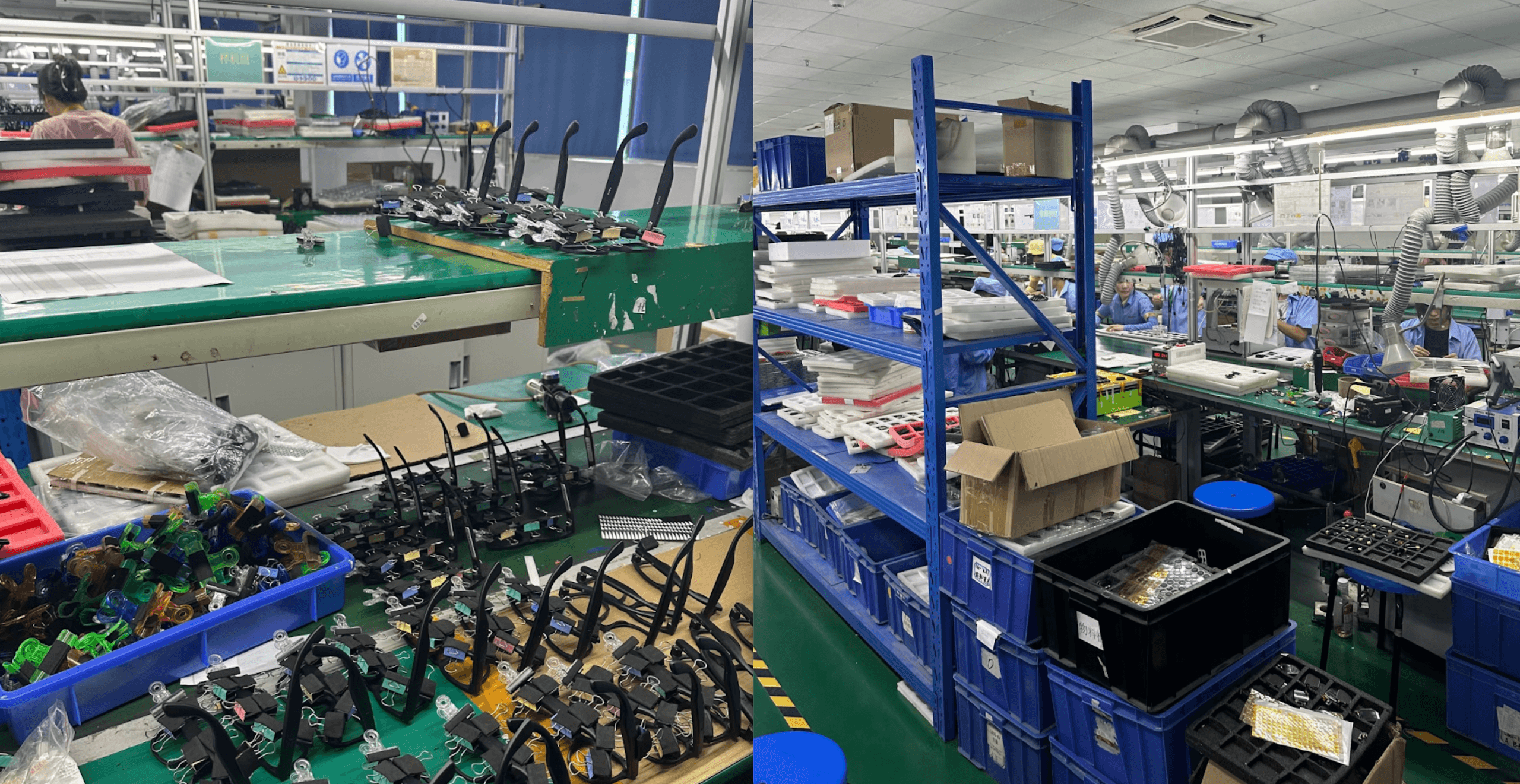
A source factory is defined not by its building, but by its independent manufacturing capability.In the phone accessories industry, a mature factory usually manages product development, structural engineering, tooling, SMT, PCBA, assembly, ageing tests, functional inspection, packaging and shipment. Different products require different technical expertise, from GaN power circuits and battery management systems to acoustic tuning and cable conductor engineering.What buyers are purchasing is not only a product, but a complete manufacturing system.
What Is a Trading Company?
The primary value of a trading company lies in supply chain integration rather than manufacturing.A trading company usually operates with sales, sourcing and export teams while coordinating multiple factories. One supplier may offer chargers, earbuds, cables and wearable accessories, although each category is produced by different manufacturers.This model works well for buyers purchasing many product categories in small quantities. However, brands requiring stable OEM production, engineering improvements and long-term consistency often face additional communication layers and reduced manufacturing transparency.
The Manufacturing Process Is Completely Different
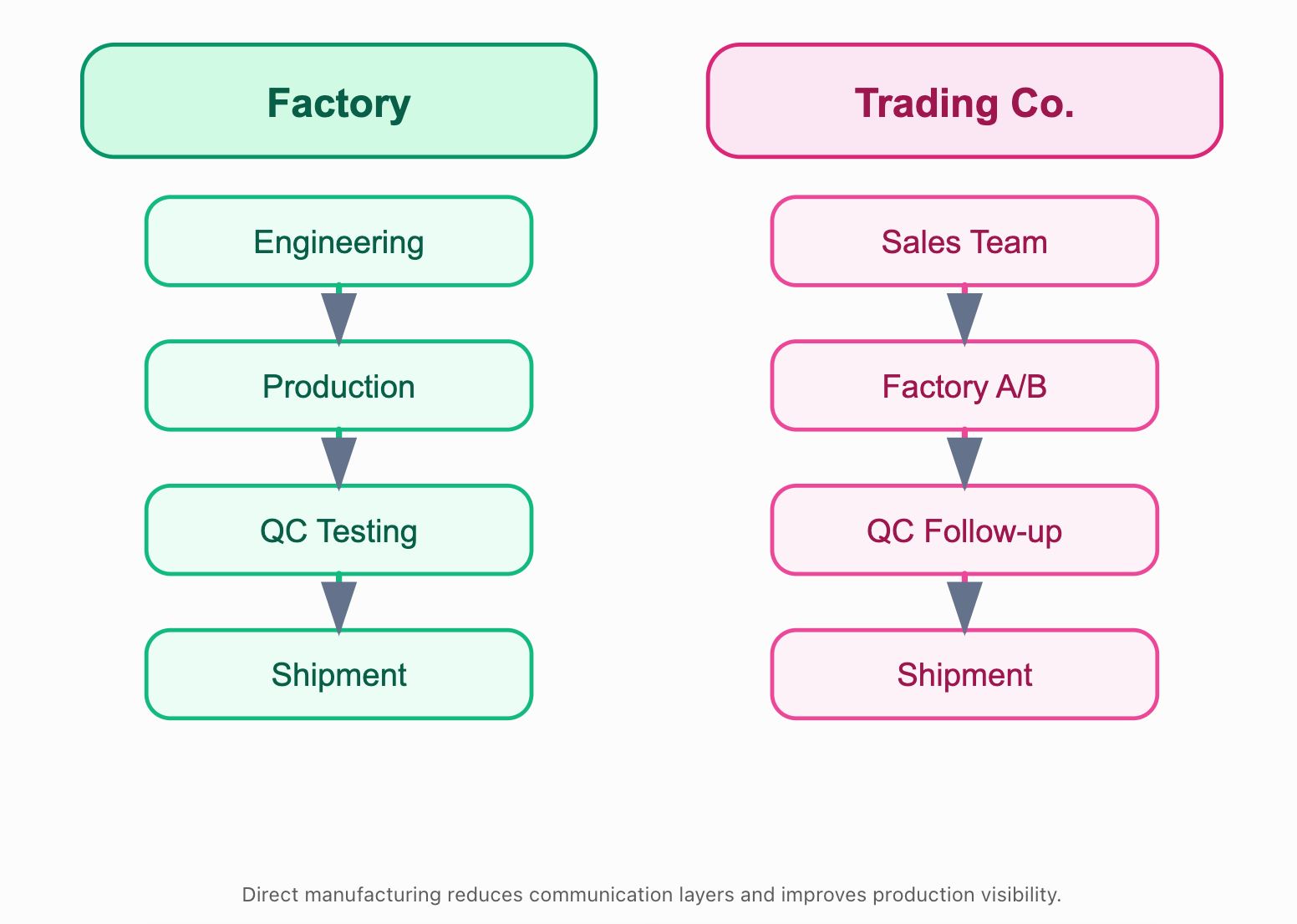
The real difference between factories and trading companies is production control rather than pricing.Inside a factory, orders immediately enter ERP scheduling, engineering confirms the bill of materials, procurement secures components, production arranges assembly, and quality teams define inspection standards.Trading companies must first communicate with partner factories before confirming quotations, lead times, samples and engineering changes. Every packaging revision, colour adjustment or structural modification therefore passes through an additional communication layer, increasing both response time and project risk.
Cost Structure: Why Factory Pricing Is More Stable
Pricing stability depends on supply chain structure rather than simple profit margins.Factories calculate quotations from raw materials, electronic components, labour, manufacturing overhead, quality costs and sustainable profit. Because procurement is managed internally, pricing can respond directly to fluctuations in copper, batteries or semiconductor components.Trading companies must add sourcing costs, operational expenses, sales teams, currency risk and additional margins. Even when the final quotation appears similar, the underlying cost structure is fundamentally different.
Quality Control Begins Before Production
Quality is engineered before production rather than inspected afterward.Professional factories complete design verification, material qualification and reliability testing before mass production. Chargers require dielectric strength and output stability verification, power banks depend on battery consistency and thermal performance, while cables require conductor resistance and bending durability evaluation.Trading companies can perform outgoing inspections, but process control, equipment calibration and manufacturing consistency remain dependent on partner factories. The lowest defect rate is achieved through production systems, not final inspection alone.
Product Development and OEM Capability
Many buyers believe OEM simply means adding a logo, but genuine OEM includes structural engineering, PCB development, packaging optimisation and coordinated manufacturing.Factories with in-house engineering teams can modify housing materials, magnetic structures, PCB layouts, interface configurations and packaging dimensions while producing prototype revisions rapidly.Trading companies can also offer customised products, but engineering work usually depends on manufacturing partners, resulting in longer development cycles and more complex technical communication.
Delivery Reliability Depends on Production Scheduling
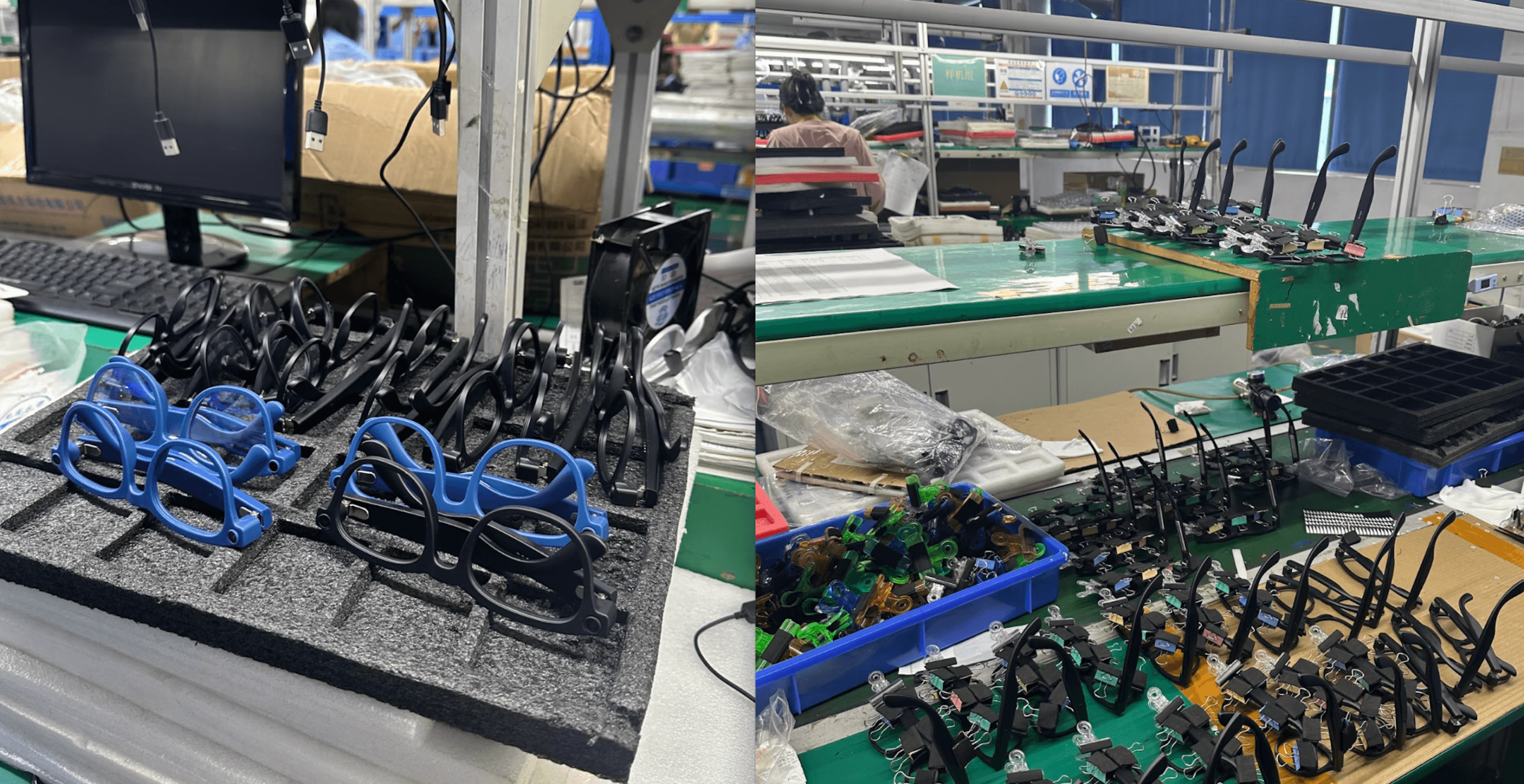
The most expensive cost in international sourcing is often delay rather than freight.Factories schedule production based on machine capacity, workforce allocation and internal planning, making delivery dates more predictable. When repeat orders arrive, capacity can be evaluated immediately.Trading companies must coordinate several manufacturers simultaneously. If one production partner falls behind, the entire shipment may be affected.For brands requiring continuous replenishment, delivery reliability is usually more valuable than the lowest quotation.
Engineering Communication Is Faster Inside a Factory
Phone accessories evolve quickly, and engineering revisions are common throughout OEM projects.Whether increasing charging power, changing interface configuration, modifying LED indicators or redesigning packaging, factories can coordinate engineering, production and sales internally for faster decision-making.Trading companies often rely on external engineering teams, increasing the risk of communication gaps during technical revisions.
How to Verify Whether a Supplier Is a Real Factory
Rather than relying only on business licenses, buyers should evaluate manufacturing evidence.A genuine factory can demonstrate assembly lines, ageing areas, quality laboratories, warehouses and packaging systems instead of only product showrooms.Professional manufacturers also discuss bills of materials, production processes, testing standards and engineering specifications with confidence, reflecting genuine technical capability behind the sales team.

Is a Trading Company Always a Bad Choice?
The answer is no.Trading companies provide valuable services in multilingual communication, multi-category sourcing and supply chain integration. Some large trading organisations even operate professional quality teams and overseas warehouses.The key is alignment. Buyers seeking diverse product portfolios may benefit from trading companies, while brands focused on proprietary products, stable quality and long-term OEM manufacturing usually gain greater value from working directly with factories.
Which Model Is Better for Different Buyers?
For Amazon brands, private label businesses, wholesalers and long-term distributors, direct factories usually provide stronger engineering support, greater pricing transparency and more consistent production quality.For gift companies, promotional buyers or businesses purchasing many unrelated electronic categories, trading companies can simplify sourcing by consolidating multiple suppliers into one export channel.The better question is not whether factories are superior to trading companies, but which supply chain structure best matches your business model.
Conclusion: Build Long-Term Value Instead of Chasing the Lowest Price
In the phone accessories industry, sourcing success is determined less by the first quotation than by the supplier’s long-term manufacturing capability.Factories create value through integrated engineering, production, quality management and supply chain control. Trading companies create value through sourcing efficiency and product consolidation. For businesses building private brands and OEM product lines, partnering with a genuine manufacturer generally offers stronger delivery reliability, faster product development and more sustainable cost management.Ultimately, choosing a supplier means choosing the stability of your supply chain for the years ahead.
Need an OEM Phone Accessories Manufacturing Partner?
If your business is looking for a reliable China phone accessories factory, we support OEM and ODM manufacturing for magnetic chargers, power banks, GaN chargers, USB-C cables and wireless earbuds. From product engineering and logo customisation to packaging and global export, our manufacturing team helps brands build consistent, scalable product lines with transparent production management.Request samples or discuss your OEM project with our engineering team.





Leave a Reply