 Get 30% Off On Selected Items


Bluetooth Earbuds Safety Hazards: Why Wireless Earbuds Can Overheat, Catch Fire or Fail and How to Choose a Safer Product
Wireless earbuds have become one of the most frequently used consumer electronics products in everyday life. People wear them while commuting, exercising, working, travelling, gaming and making calls, often for several hours a day.
Unlike traditional wired earphones, true wireless earbuds contain lithium-ion batteries, charging circuits, Bluetooth chipsets, speakers, microphones and other electronic components inside an extremely small enclosure.
That means a TWS earbud is not simply an audio device. It is a highly integrated electronic product whose safety depends on battery cells, protection circuitry, charging design, mechanical structure, thermal management, manufacturing processes and quality control.
Concerns about wireless-earbud battery safety are real, although individual incidents must be understood carefully. In 2025, Health Canada recalled a pair of true wireless earbuds because the USB charging cable had been manufactured with incorrect wiring material, creating overheating, burn and fire hazards; three incidents had been reported at the time of the recall. In the UK, a January 2025 safety notice concerning Audio-Technica true wireless headphones stated that a manufacturing defect in the charging case’s built-in battery could cause overheating or fire and potentially result in burns. The US Consumer Product Safety Commission has also issued recalls involving lithium-ion battery-powered Bluetooth audio products because overheating presented a fire hazard.
There have also been media reports of individual consumers claiming serious earbud failures while wearing them. In 2024, a Galaxy Buds FE user in Turkey reportedly claimed that an earbud failed while being worn and caused hearing damage. However, such an individual account should not be treated as proof that all products of the same category present the same risk, nor should an exact failure mechanism be assumed without a technical investigation.The important question is therefore not simply whether the word “explosion” appears in a headline.
The important questions are: How can such a small wireless earbud experience a battery failure? Which components determine the safety margin? What warning signs should consumers recognise? And what should buyers look for before choosing a product?
This article examines those questions from the perspectives of battery cells, circuit design, charging systems, materials, manufacturing and real-world use.

Why Do Bluetooth Earbuds Have Battery Safety Risks?
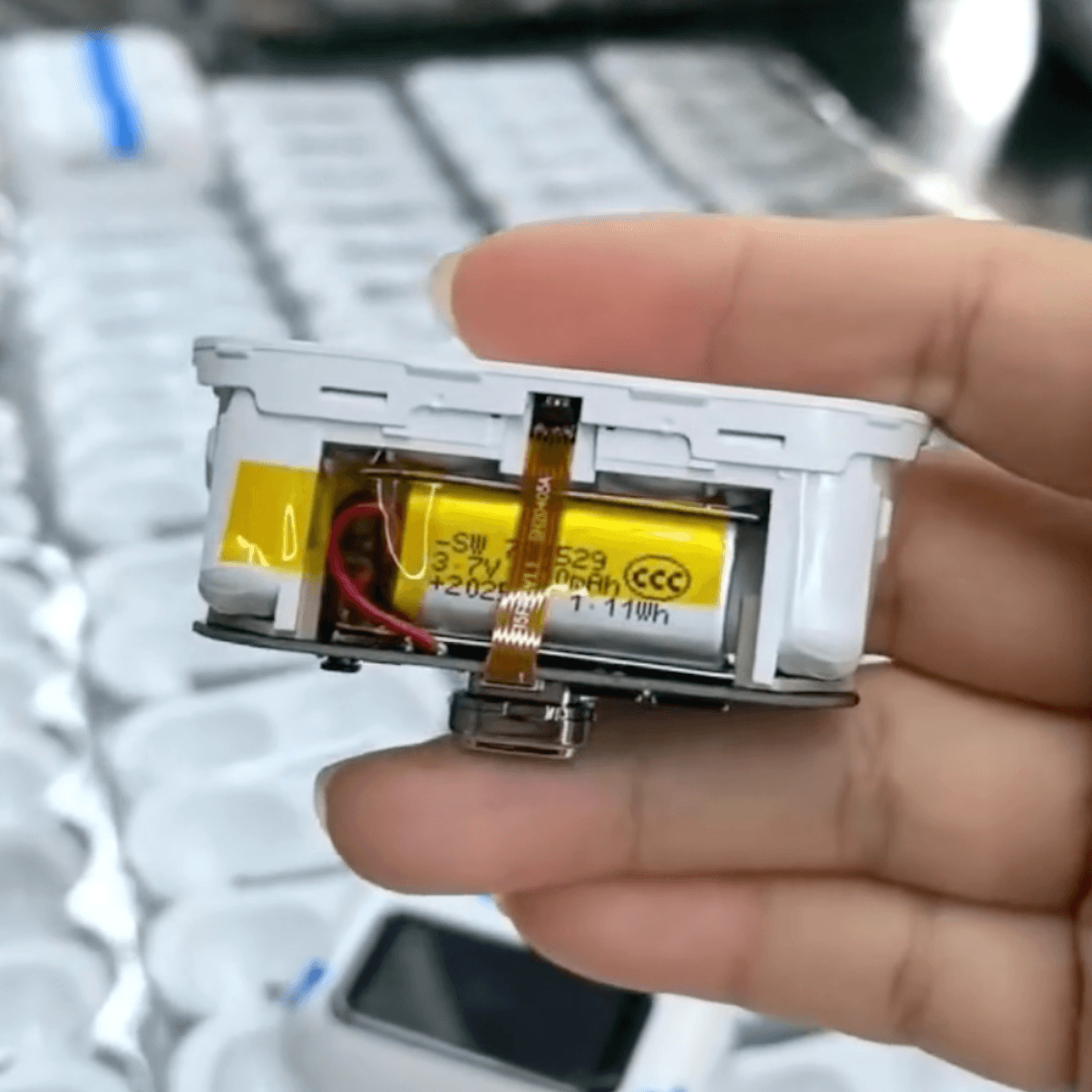
The primary energy source inside a TWS earbud is a lithium-ion battery.To keep earbuds small and lightweight, the cell is usually miniature, but it remains a complete electrochemical energy-storage system.During normal operation, the battery must maintain controlled voltage, current and temperature during charging and discharging. Internal short circuits, excessive heat, overcharging, mechanical damage or manufacturing defects can disrupt that balance.
One of the most important concepts is thermal runaway.Thermal runaway is not simply a battery becoming warm. It is a potentially self-reinforcing failure process. As battery temperature rises, internal reactions can accelerate. Those reactions generate additional heat, which can raise the temperature further. If heat generation exceeds the ability of the system to control or dissipate it, temperature can rise rapidly.Electrical Safety First states that poor-quality or substandard components, flawed design, physical abuse and improper charging or discharging can make lithium-ion batteries thermally unstable and lead to catastrophic failure in severe cases.
Therefore, the real explanation for a serious earbud battery incident is not simply that “wireless products are dangerous”. It is that one or more parts of the battery safety system have failed or been compromised.
The Battery Cell: The Most Important Safety Component
If the earbud is considered a miniature electronic system, the battery cell is its energy centre.Consumers often pay attention to ANC, sound quality, Bluetooth version, battery life and price, but few consider the safety characteristics of the cell itself.High-quality cells generally provide better material consistency, controlled internal resistance and more reliable manufacturing quality.
Low-quality cells do not necessarily fail immediately. Their greater concern is that they may have a smaller safety margin.For example, if one cell has significantly higher internal resistance than another cell of similar capacity, more energy is converted into heat during charge and discharge. Long-term heat accelerates battery degradation, which can increase internal resistance further and create a cycle of increasing temperature and increasing degradation.
More serious failures can result from internal manufacturing defects such as separator damage, contamination or electrode abnormalities. These problems usually cannot be identified visually by consumers, which is why cell sourcing, batch traceability and manufacturing inspection are critical.
The PCB and Protection Circuit Control How the Battery Is Managed
Although the PCB inside an earbud is extremely small, it performs many critical functions.It controls charging input, battery management, power conversion, Bluetooth connectivity, audio processing, touch input, microphones and speakers.From a battery-safety perspective, charging and protection functions are especially important.A properly designed power-management system should control the charging process according to battery characteristics and limit or interrupt power when abnormal conditions occur.
The exact protection architecture varies by product design, but overcharge protection, over-current protection, short-circuit protection and temperature monitoring are fundamental elements of a safe system.Without adequate protection, several failure scenarios become more difficult to contain.If battery voltage rises abnormally, the system should prevent continued unsafe charging.
If abnormal current occurs, the system should limit or disconnect the load.If a short circuit occurs, protective circuitry should reduce the chance of escalation.If temperature becomes excessive, the system should reduce power or stop charging.These are not decorative “smart features”. They are part of the safety foundation of a rechargeable electronic product.
Why Is the Charging Case Also Important?
Many consumers focus on the earbuds themselves because they are worn in the ear, while the charging case receives less attention.In reality, the case contains a rechargeable battery and charging electronics, and its battery is often larger than the cells inside the individual earbuds.Users may place the earbuds into the case several times a day. Every time they do so, the charging system may activate.The charging case therefore has three key safety areas: the battery, charging circuit and charging port.
A 2025 UK safety notice concerning Audio-Technica true wireless headphones identified a manufacturing defect in the charging case’s built-in battery that could cause overheating or fire and potentially result in burns.This is an important reminder that a battery incident does not necessarily occur while an earbud is in the user’s ear. It can also occur while a device is sitting on a desk, inside a bag or connected to a charger.
Consumers should therefore inspect both the earbuds and charging case.Swelling, abnormal heat, burning odours, damaged connectors or unstable charging are warning signs that should not be ignored.

Why Do Wireless Earbuds Become Warm?
“Warm” does not automatically mean “dangerous”.All electronic devices generate some heat during charging and operation. Electrical resistance produces heat in circuits, while the battery also releases some heat during charging and discharging.The important distinction is between normal temperature rise and abnormal heating.
Consumers should pay attention when a device suddenly becomes much hotter than it used to, the charging case heats up without an obvious load, the earbud becomes unusually hot while being worn, or the product remains hot after use.Electrical Safety First advises that batteries can generate heat during normal use and charging, but consumers should stop using headphones if they become damaged, swollen, produce unusual smells, spark or emit smoke. It also recommends charging headphones on a hard, flat surface rather than on bedding or other flammable materials.
What Conditions Can Increase the Risk of Fire or Thermal Runaway?
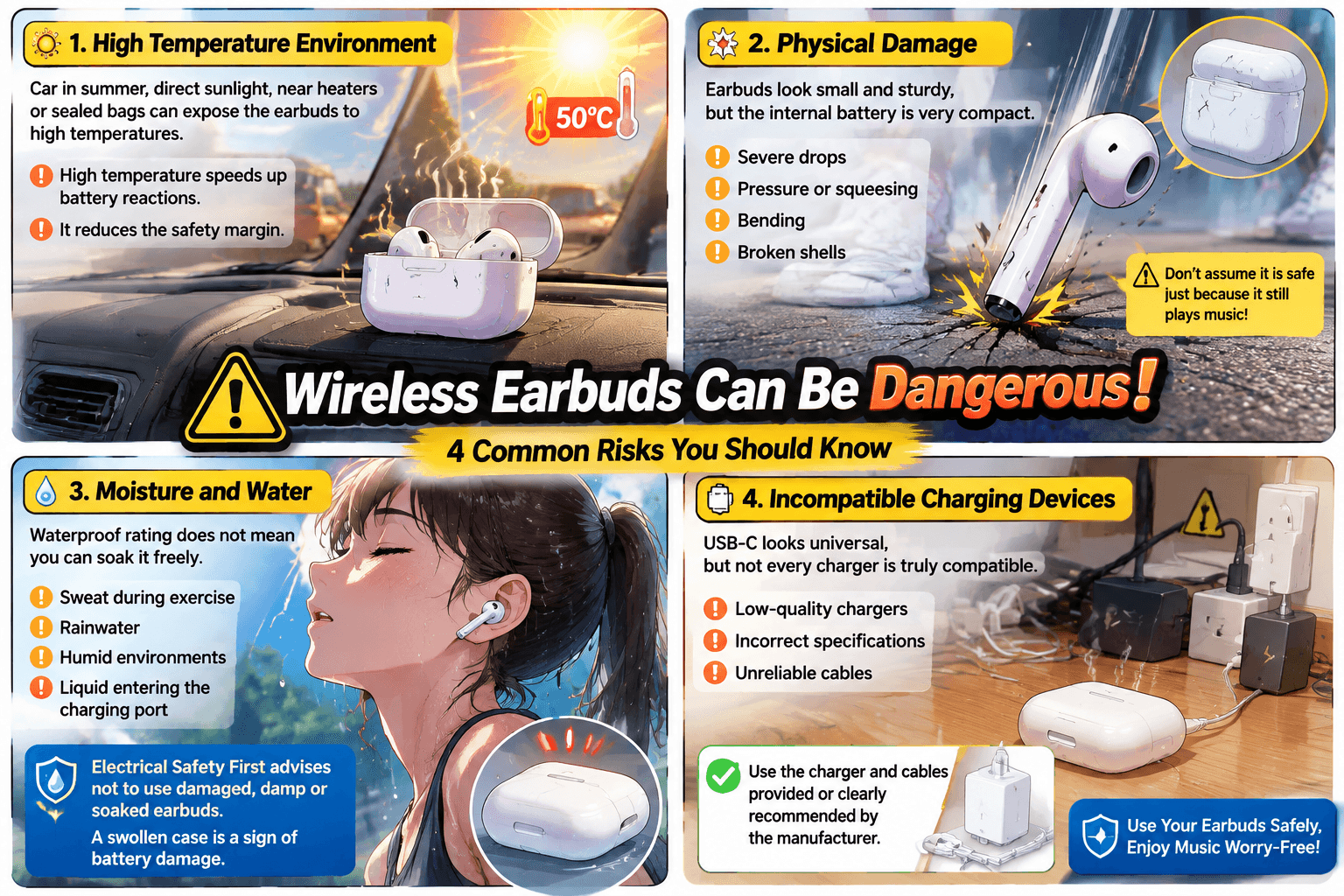
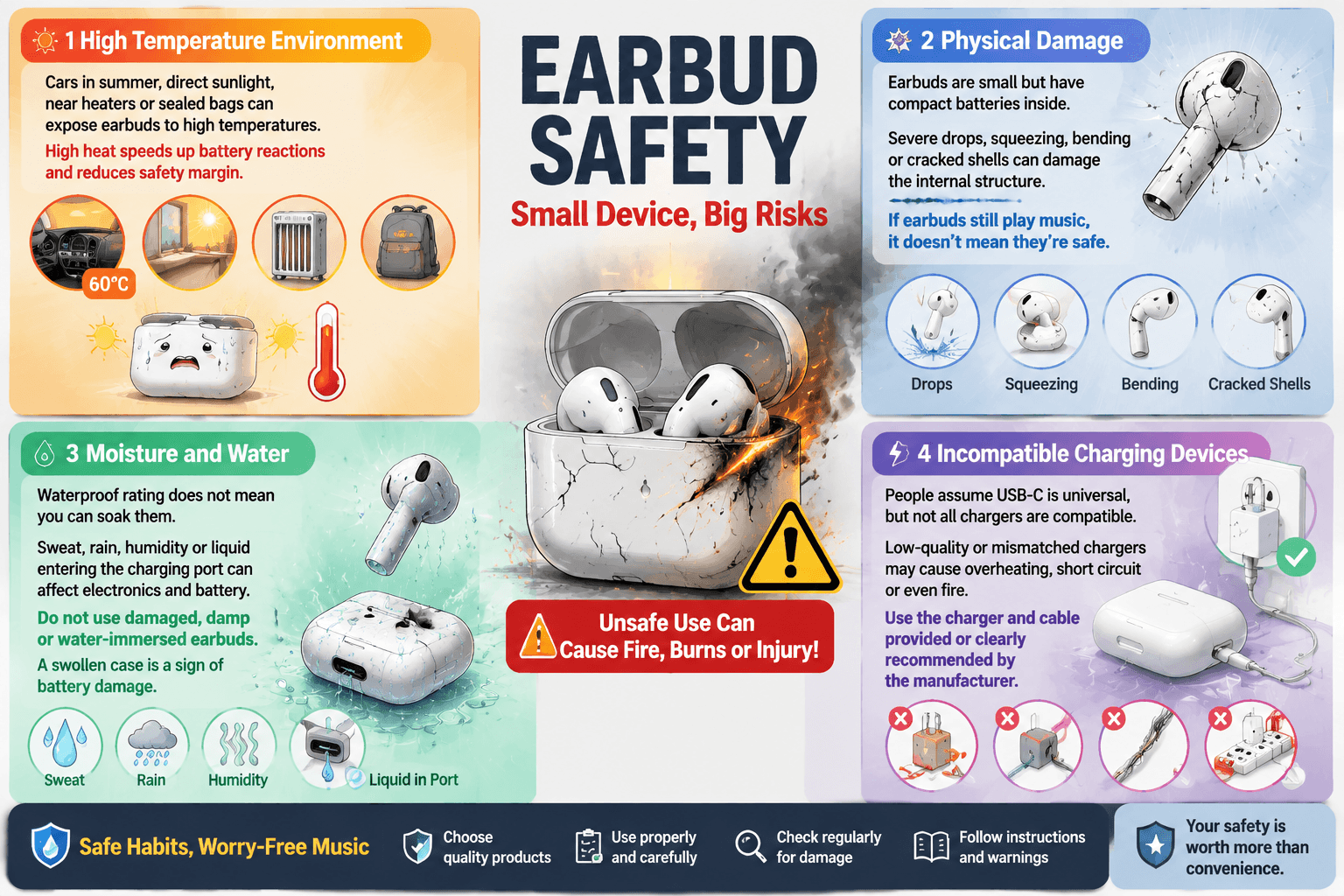
High temperatures Parked vehicles, direct sunlight, heating equipment and enclosed bags can expose products to elevated temperatures.High temperatures increase battery stress and reduce safety margins.
Physical damage Earbuds are small and may appear robust, but their batteries are tightly integrated into a compact structure.
Moisture and water exposure A water-resistance rating does not mean a product can be submerged without limits.Sweat, rain, humidity and liquid entering the charging connector may affect the electronic system and battery.Electrical Safety First specifically advises users not to continue using headphones that are damaged, wet or submerged and identifies swelling as a sign of battery damage.
Incompatible or poor-quality charging equipment A USB-C connector is a physical interface, not a guarantee that every charging setup is equally suitable.Users should use the charger and cable supplied with the product or those recommended by the manufacturer.
The Risk of Low-Quality Earbuds Is More Than Shorter Lifespan
Consumers often associate low-quality earbuds with poor sound, short battery life or unstable Bluetooth connectivity.Those are legitimate concerns, but from a safety perspective, the bigger issue is how much safety margin exists within the design and manufacturing process.
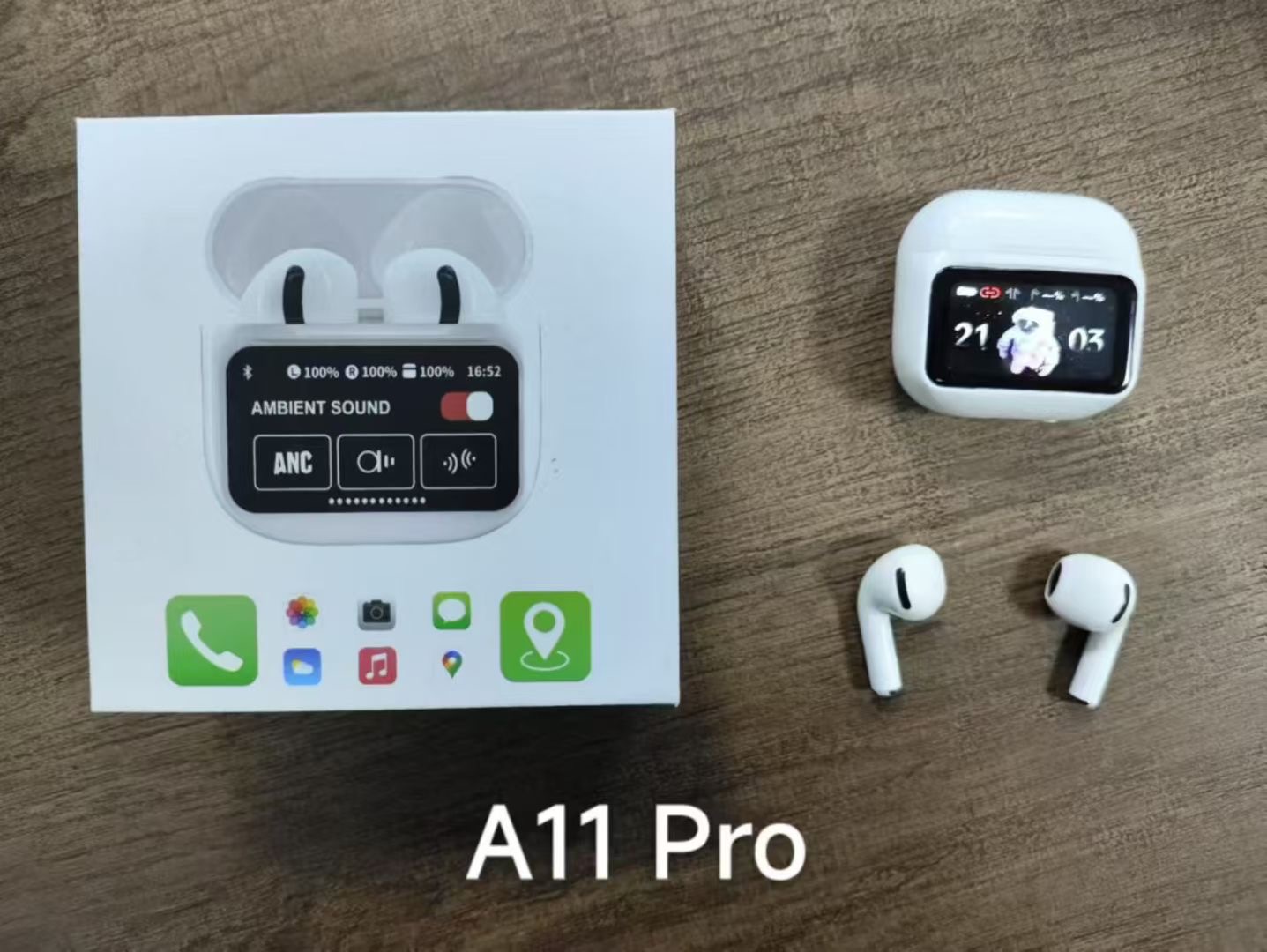
A product can have an attractive exterior, a large display, ANC, ENC, HiFi branding, low-latency modes and long advertised battery life, yet none of these features replaces proper battery protection.Poor battery cells can increase heat generation and accelerate degradation.Weak protection circuitry can reduce the ability to manage abnormal conditions.Poor soldering can become a reliability problem after repeated movement, vibration or impact.
Inadequate internal fixation can place mechanical stress on the battery and other components.Dirty or poorly manufactured charging contacts can increase contact resistance and produce localised heating.The more useful question is therefore not “How many features does this earbud have?” but “How well has the entire safety system been designed and manufactured?”
Does a Low-Priced Earbud Automatically Mean an Unsafe Earbud?
No. Price alone does not determine whether a product is safe.The market contains reasonably priced products with good manufacturing quality, and expensive products can also experience recalls or defects. Therefore, “expensive equals safe” and “cheap equals dangerous” are not reliable rules.Safety depends on battery quality, electronic components, engineering design, manufacturing processes, testing and supply-chain management.
However, an extremely low price should encourage more careful evaluation.A TWS product requires batteries, PCBs, Bluetooth components, speakers, microphones, housings, charging contacts, assembly, testing, packaging and logistics.When a price is pushed extremely low, savings must come from somewhere.Consumers cannot always see where those savings are being made.
The better question is not simply: “Why is it so cheap?”
It is: “Where has the cost been reduced?”
If the saving comes from simpler packaging or fewer accessories, the safety impact may be limited.If it comes from battery cells, protection components or reduced testing, the implications may be very different.
What Should Consumers Look for When Buying Bluetooth Earbuds?
Look beyond battery life Consumers often compare “6 hours, 8 hours or 10 hours” of battery life.But runtime is only an output.The underlying battery design, quality and safety controls matter more.Brand buyers can go further by requesting battery specifications, testing documentation, traceability and reliability data from suppliers.Individual consumers should prioritise reputable brands and transparent product information.
Watch for swelling Swelling is one of the clearest warning signs.If an earbud or charging case changes shape, develops a visible gap, or no longer closes normally, stop using it.UK government guidance identifies swelling, leaks, unusual heat, hissing or cracking sounds, strong smells and abnormal charging performance as potential warning signs of lithium-battery failure. If a battery or device is smoking, the guidance says to raise the alarm, get out, stay out and call 999.
Watch for charging abnormalities A healthy product should charge consistently.Repeatedly starting and stopping, unusual battery readings or inconsistent charging behaviour deserve attention.A device that becomes unusually hot while charging should not simply be left plugged in and ignored.
Evaluate the seller, not only the product A trustworthy brand should provide clear product information, instructions and customer support.Electrical Safety First recommends buying headphones from reputable retailers rather than relying solely on third-party sellers online, and warns consumers not to depend only on online reviews because reviews can be manipulated. It also recommends registering products so recall information can reach users more easily.
Why Should You Avoid Charging Earbuds on a Bed?
This is an easy safety issue to overlook.Many people place their earbuds or charging case on a bed before going to sleep and leave them charging overnight.The problem may not be the product alone. The charging environment matters.
Bedding, pillows and clothing can restrict airflow and trap heat around the device.Electrical Safety First recommends charging headphones on a hard, flat surface instead of bedding or other potentially flammable materials.A simple environmental change can therefore reduce unnecessary risk.
A product in normal condition should be charged where heat can dissipate effectively.A product that is already showing abnormal heating should not be left charging unattended.
Why Should You Avoid Unattended Charging?
Small earbud batteries often lead users to assume that overnight charging is harmless.But safety advice is not based only on battery size. It also considers what happens if a fault develops while nobody is present.A properly designed product should control the charging process, but no electronic system is completely immune to defects.
Potential issues include ageing batteries, damaged cables, poor contacts, charging-circuit failures or internal component defects.If nobody is present, signs such as abnormal heat, smell or smoke may not be detected quickly.Electrical Safety First recommends avoiding overnight charging and not leaving headphones charging while away from home.From a risk-management perspective, disconnecting the charger before sleeping or leaving the house is the safer practice.
What Should You Consider When Wearing Earbuds During Exercise?
Exercise is one of the most common scenarios for TWS earbuds, but it also introduces additional environmental factors.Sweat, humidity, increased temperature, movement and accidental drops can all place more stress on the device.Even when a product is water-resistant, it should only be used within its stated protection limits.
Charging deserves particular attention after exercise.If sweat or moisture remains on the earbuds or charging contacts, immediately placing them into the charging case may create contact and corrosion problems.The safer practice is to clean and dry the device before charging.
Should You Replace Earbuds That Still Work After a Severe Drop?
“Still works” is not the same as “still safe”.A severe drop can damage the battery, PCB or internal connections without creating an obvious external symptom.A minor drop without any abnormal behaviour does not automatically mean the battery has failed.
However, a product that has experienced severe impact, crushing or visible deformation should be treated more cautiously.Cracked housing, sudden heating, unusual odours or abnormal battery behaviour are reasons to stop using the product and contact the manufacturer.A visually intact enclosure does not guarantee that the internal battery has remained undamaged.
What Should You Do If Earbuds Swell, Smell Strange or Smoke?
This is one of the most important things consumers should know in advance.If an earbud or charging case is visibly swollen, do not continue wearing it, charging it or pressing the enclosure.If you notice an unusual smell, hissing, cracking noises, severe heat or smoke, do not continue using the device to see whether it recovers.
If the product is charging and can be safely disconnected without touching an already dangerously hot or smoking device, disconnect the power. Otherwise, prioritise personal safety.If smoke or fire is already present, do not stay nearby attempting to dismantle or manage the device. UK government guidance states that when a lithium battery or device is smoking, people should raise the alarm, get out, stay out and call 999.
Do not open the battery.Do not puncture it.Do not squeeze a swollen battery.Do not place a damaged lithium battery into ordinary household waste.Damaged batteries should be handled according to the disposal procedures specified by the relevant local authority or recycling system.
How Should Brands and Buyers Evaluate an Earbud Manufacturer?
Consumers normally judge a product through its brand, seller and product information.B2B buyers should go much further.Amazon sellers, independent brands, wholesalers and distributors should evaluate the supplier behind the product rather than focusing only on the quotation.
Instead of asking only:“What is your price?”
Professional buyers should ask:
“What battery cell is used?”
“What protection functions are built into the design?”
“How are battery batches controlled?”
“What testing is completed before mass production?”
“How is the charging case tested?”
“What quality-control procedures are used?”
“What compliance documents are available for the target market?”
These questions reveal far more about manufacturing capability than a product catalogue.A genuine manufacturer should be able to discuss these technical subjects clearly rather than simply sending product photos and a price.
Why Does the Source Factory Matter for Earbud Safety?
Wireless earbuds are highly integrated products.They are not simply a collection of components assembled together.Battery dimensions affect mechanical design.Mechanical design affects thermal management.PCB placement affects battery and antenna layout.Battery capacity affects weight and internal space.
Speakers, microphones, displays, touch modules and App functions all increase system complexity.Safety therefore has to be considered from the engineering stage rather than being left entirely to final inspection.A genuine source manufacturer can connect engineering, procurement, assembly and quality control directly.If thermal performance needs improvement, the factory can adjust the mechanical and electronic design.
If battery consistency is inadequate, incoming materials can be screened.If charging contacts show poor durability, materials or manufacturing processes can be changed.If mechanical tolerances place stress on the battery, structural components can be revised.These improvements require actual manufacturing control rather than simply sales coordination.

Why Should Smart Earbuds Be Developed Around Both Features and Safety?
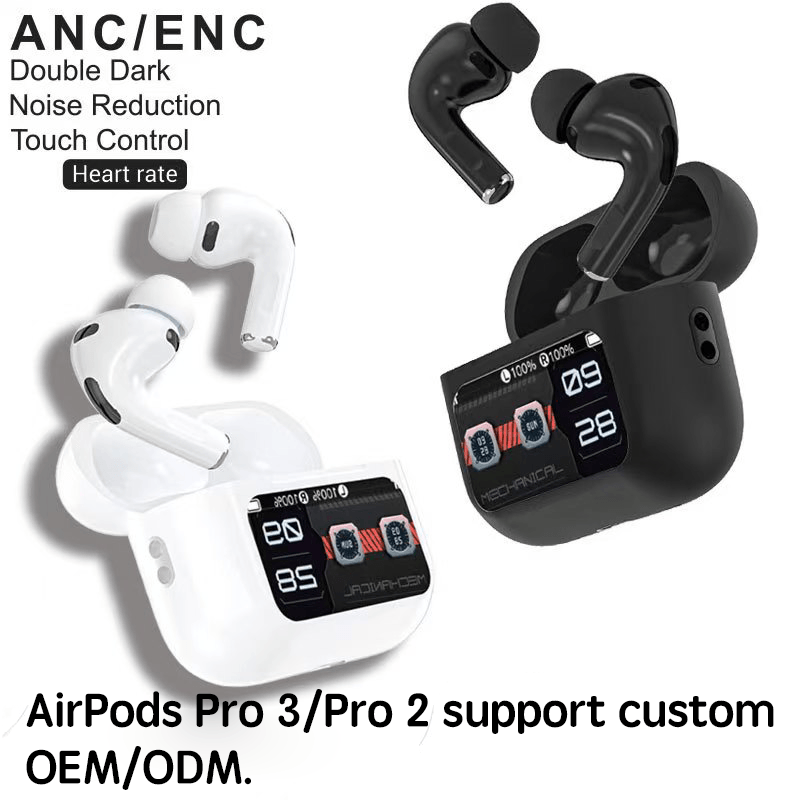
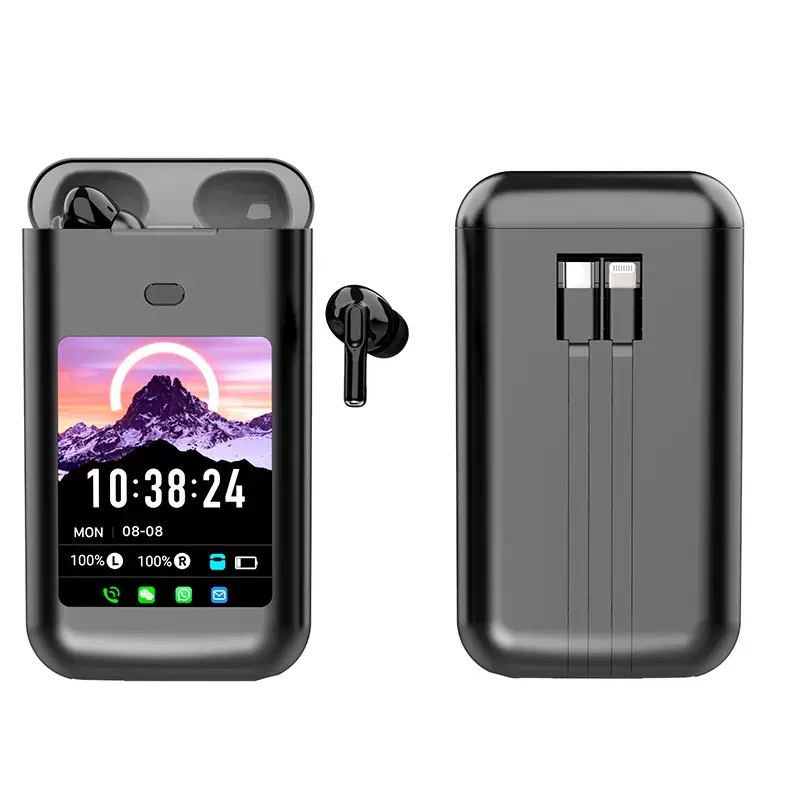
The smart touchscreen wireless earbud platform we are developing is a good example of this highly integrated approach.In addition to conventional TWS capabilities such as Bluetooth connectivity, music playback, calls and touch controls, the product can incorporate a touchscreen charging case, App functions, lyrics display, music controls, gaming-related features and AI translation functions depending on the selected configuration.These features create strong market differentiation, but they also increase engineering complexity.
A touchscreen requires additional display and control electronics.An App requires software support.AI translation requires coordination between the device and software services.More functionality means more components, more interactions and more complex power management.For a source manufacturer, the objective therefore cannot simply be to add as many marketing features as possible.
Battery performance, PCB design, mechanical structure, power consumption and thermal management must work together.A smart earbud designed for long-term commercial use should combine functionality, reliability, safety and brand value rather than relying on an increasingly long list of features.
Consumers Should Avoid Opaque Products, Not Simply Cheap Products
Consumers do not need to become electrical engineers.It is unrealistic to expect someone to open an earbud and inspect the battery separator, PCB copper thickness or protection circuit.What consumers can do is choose products with greater transparency.Clear product information.A clearly identified manufacturer or brand.Accessible after-sales support.
Appropriate compliance information.Traceability when something goes wrong.Clear charging requirements.And clear instructions about limitations and safe use.These details may not sound as exciting as “ANC”, “AI”, “HiFi” or “low latency”, but they are part of what allows an electronic product to be used safely and correctly.


Leave a Reply